For decades, fence posts have been installed using little more than a sledgehammer, determination, and a lot of physical labor. While manual post driving has built countless miles of fencing across farms, ranches, construction sites, and residential properties, today’s contractors are asking an important question:
Is there a better way?
As labor costs rise and project schedules tighten, more contractors are replacing traditional manual methods with powered post drivers. The goal isn’t simply to make the job easier—it’s to complete projects faster, reduce labor costs, improve installation quality, and ultimately increase profitability.
But is a powered post driver really worth the investment?
In this guide, we’ll compare manual and powered post drivers side-by-side, examining speed, labor requirements, operating costs, safety, and long-term return on investment. Whether you’re an independent fencing contractor or managing multiple crews, this comparison will help you decide which solution makes the most sense for your business.
A manual post driver is one of the oldest fence installation tools still in use today. Typically made from heavy steel with two side handles, it is lifted over the top of a post and repeatedly slammed downward to drive the post into the ground.
Some installers also use sledgehammers or weighted driving caps to do the same job.
Manual drivers are commonly used for:
Their biggest advantage is simplicity. They require no fuel, batteries, or engines and have virtually no maintenance requirements.
However, simplicity often comes at the expense of productivity.
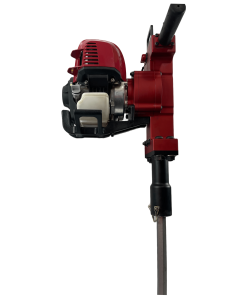
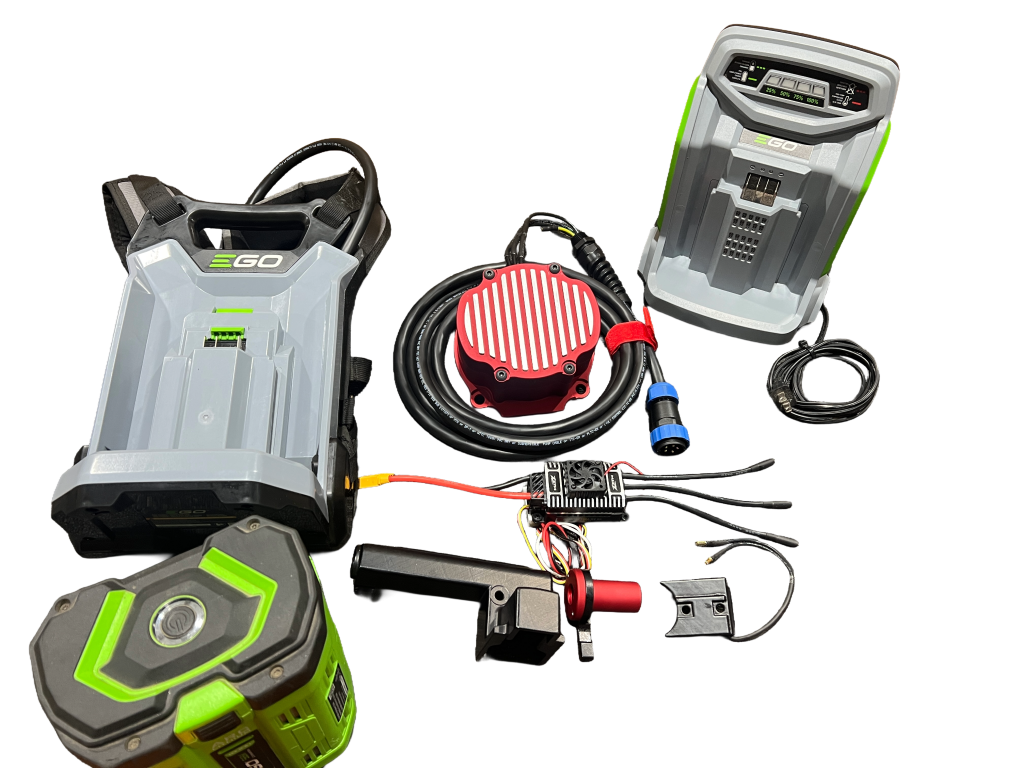
A powered post driver uses an internal hammering mechanism powered by either a gasoline engine or a rechargeable battery to deliver repeated high-impact blows to the post.
Instead of relying on human strength to generate force, the machine does the work.
Powered post drivers are used for:
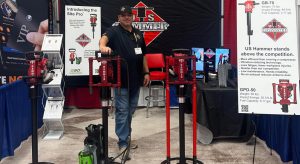
Professional-grade equipment like the US Hammer GPD-50 Gas Powered Post Driver and the US Hammer BPD-50 Battery Powered Post Driver are designed specifically for contractors who install dozens—or even hundreds—of posts on a regular basis.
The most obvious difference between manual and powered post drivers is installation speed.
With a manual driver, every inch of progress depends entirely on the operator’s physical effort.
As fatigue sets in, production naturally slows.
Powered post drivers deliver consistent impact from the first post of the day to the last.
Advantages:
Limitations:
Advantages:
For contractors bidding commercial projects or long agricultural fence runs, even a modest increase in installation speed can result in significant labor savings over the course of a season.
Most contractors focus on equipment cost.
Successful contractors focus on labor cost.
Labor is usually the largest expense on any fence installation project.
Let’s consider a simplified example.
Imagine a two-person crew installing hundreds of T-posts on a ranch.
If powered equipment allows that crew to complete the project in significantly less time, you’ve reduced:
You also free your crew to begin the next project sooner.
Multiply those gains across dozens of jobs each year and the return on investment becomes substantial.
The real question isn’t “How much does a powered post driver cost?”
It’s “How much labor will it save over the next five years?”
Fence installation is hard work.
Manual driving requires repeated heavy lifting and impact throughout the day.
This often leads to:
As crews tire, mistakes become more common.
Posts may be driven unevenly.
Measurements become less accurate.
Workers require additional breaks.
Powered post drivers dramatically reduce these physical demands.
The operator guides the tool while the machine delivers the impact force.
Less fatigue means:
One overlooked advantage of powered post drivers is consistency.
Manual methods rely entirely on the operator.
Powered equipment delivers nearly identical impact throughout the installation process.
The result is often:
Customers may not notice the tool you used—but they’ll notice the finished fence.
Today’s contractors aren’t limited to a single type of powered equipment.
US Hammer offers solutions designed for different types of work.
The GPD-50 is built for demanding applications where maximum driving force and continuous runtime are essential.
Ideal for:
Benefits include:
If your crews spend long days driving posts in challenging environments, a gas-powered system provides the power and endurance needed to keep moving.
Battery technology has transformed cordless construction equipment, and post drivers are no exception.
The BPD-50 combines impressive driving power with the convenience of cordless operation.
Ideal for:
Benefits include:
For many contractors, battery-powered equipment has become the preferred choice for everyday fence installation.
Maintenance requirements are minimal.
Occasional cleaning and inspection are generally sufficient.
However, manual tools often take more abuse because operators compensate with additional force.
Professional-powered post drivers require periodic maintenance, but modern designs are built with contractors in mind.
Routine maintenance typically includes:
The time spent maintaining quality equipment is often insignificant compared to the labor hours saved during installation.
Every construction project carries some level of risk.
Manual post driving introduces repetitive impact motions that increase the likelihood of:
Powered equipment reduces many of these repetitive motions.
While operators should always wear appropriate personal protective equipment—including gloves, hearing protection, eye protection, and steel-toe boots—reducing physical strain contributes to a safer jobsite.
Powered equipment offers advantages for nearly every fencing professional, but it’s especially valuable for:
If you’re installing posts regularly, powered equipment quickly becomes one of the most valuable tools in your fleet.
For occasional homeowners installing a handful of fence posts every few years, a manual driver may still be a practical solution.
But for professionals whose business depends on efficiency, the equation changes dramatically.
A powered post driver can help you:
When viewed over the life of the equipment, many contractors find that the labor savings alone justify the investment.
Professional contractors need equipment they can depend on every day.
US Hammer designs contractor-grade powered post drivers built to withstand the demanding conditions found on farms, ranches, construction sites, and commercial fencing projects.
Whether you choose the GPD-50 Gas Powered Post Driver for maximum power and runtime or the BPD-50 Battery Powered Post Driver for cordless convenience and portability, you’ll be investing in equipment engineered to improve productivity while reducing physical strain.
With interchangeable adaptors, durable construction, and dependable customer support, US Hammer continues to help contractors work smarter—not harder.
Manual post drivers have served the fencing industry well for generations, but today’s contractors face different challenges than they did twenty years ago.
Labor is more expensive.
Projects move faster.
Customers expect quicker completion times.
Margins are tighter than ever.
Powered post drivers help solve these challenges by allowing contractors to increase efficiency without sacrificing quality.
If your goal is to complete more work, reduce labor costs, and build a more profitable fencing business, upgrading from manual methods to professional-powered equipment is one of the smartest investments you can make.
Explore the complete lineup of contractor-grade powered post drivers, accessories, and adaptors from US Hammer to find the right solution for your next project.